HYPERSHIFT
launch brief
A review of drinkhypershift.com and its search presence, a customer lifecycle plan across email, SMS, push, paid social and LinkedIn, a clickable app prototype, and a local-first launch plan for Danville and the Bay Area. Written for a mid-December 2026 launch.
Start here
The product and the can art are strong. Almost everything around them is still at zero: seven thin pages, no analytics, no pixel, a contact form standing in for an email list, 42 Instagram followers, and a sugar claim that says one thing on the site and the opposite on Instagram. None of that is hard to fix in 45 days. What matters is doing the fixes in the right order, so launch day lands on a list that exists and a story search engines can repeat.
The ten things that matter most
- Settle the sugar story this week. The website says real cane sugar. The Instagram bio says zero sugar. Google's AI Overview repeats the website. Every ad, every text and every buyer conversation depends on which one is true.
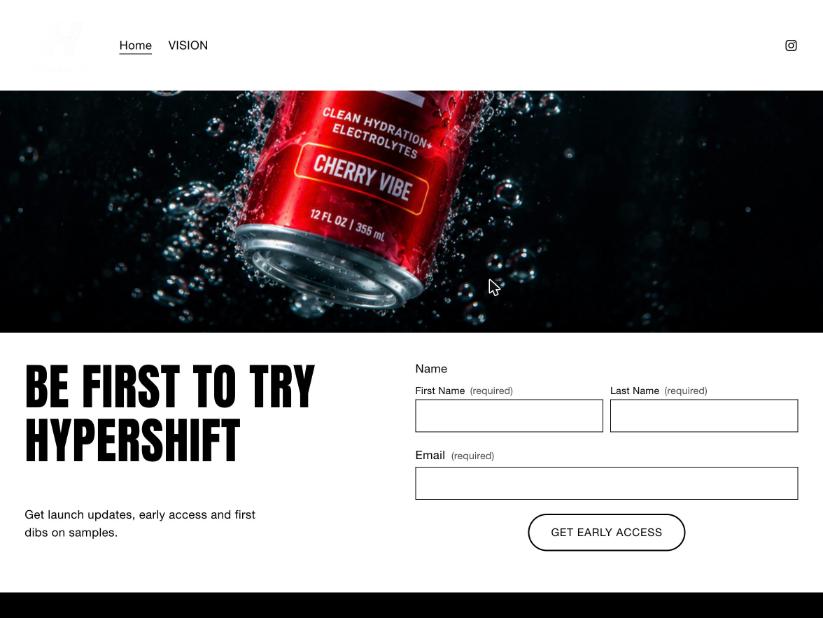
- Turn the contact form into a real list. The "Get early access" form is a Squarespace contact form with first name, last name, email and a message field. Replace it with an email and phone capture wired to Klaviyo so the launch sequence can actually be sent.
- Install measurement before spending a dollar. No Google Analytics, no Meta pixel, no Google Search Console evidence. Without them the ads cannot learn and nobody will know what worked.
- Own "HyperShift drink" and "HyperShift hydration," not "hypershift." The bare word belongs to Red Hat's software, an IT company that owns hypershift.com, Razer and a car-paint brand. The two-word terms already rank #1. Build on that.
- Give search engines and AI something to read. One page per flavor, a real About page, an expanded FAQ, product schema, alt text. Today the homepage has about 80 words of copy and two stray pages are in the sitemap.
- Launch local first, with DTC as the backstop. At a $30-ish 12-pack and $14 to $25 to ship it, paid DTC cannot carry the brand on its own. Independent grocers, gyms, studios, run clubs and offices within 15 miles of Danville can, and they feed the DTC list.
- Run one lifecycle, not three campaigns. Waitlist, launch, first order, first sip, reorder, lapsed, subscriber, advocate, new release, near you. Each stage has a trigger, a channel and one message. The app prototype lets you feel them.
- SMS is the launch channel, push is the retention channel. Texts reach the list on day one. Push only matters once a few thousand people have the app, so the app ships as a web app first and a native app second.
- Founder-led content on LinkedIn and Instagram beats paid in month one. Ray building in public, Nick amplifying to a B2B network, both pointing at one link.
- Keep the numbers you promise small. Everything in the budget section is set so a decent month beats it.
What's live today
Checked on 31 Oct 2026 in Chrome at desktop width, plus a raw crawl of the HTML, robots.txt and sitemap.
Inventory
| Item | State on 31 Oct 2026 |
|---|---|
| Platform | Squarespace (assets on static1.squarespace.com). Cart icon present, no products, no checkout. |
| Pages in sitemap | 7: home, faqs, behind-the-shift, terms, privacy, /van (empty page, no copy), /about-2-1 (consulting template copy: "helped organizations across sectors," a "Book Now" button to /work-with-me). |
| Navigation | Home, Vision, Instagram icon. Footer: Terms, Privacy, FAQs. |
| Homepage copy | About 80 words. H1 "Hydration for what's next." Second H1 "Be first to try HyperShift" (two H1s on one page). |
| Title and description | Title "HYPERSHIFT | Clean Hydration. Better Taste." Meta description is good and specific. Canonical set. Open Graph image set, but served over http while the site is https. |
| Structured data | One generic WebSite block. No Organization, Product, Brand or FAQ schema. |
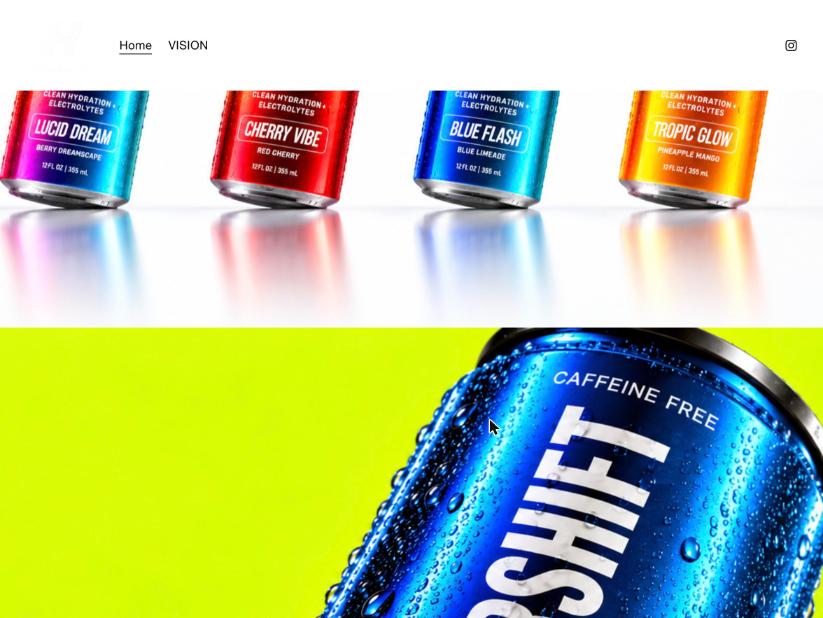
| Images | All product images have empty alt text. One file is named "Cobalt Blue HYPERSHIFT Energy Drink Can.png," which contradicts the caffeine-free message and is visible to crawlers. |
| Analytics and pixels | None found: no GA4, no Meta pixel, no TikTok, no Klaviyo, no Hotjar. |
| Email capture | Squarespace contact form (fname, lname, email, hidden message field). No email provider connected. Submissions land in the Squarespace inbox. |
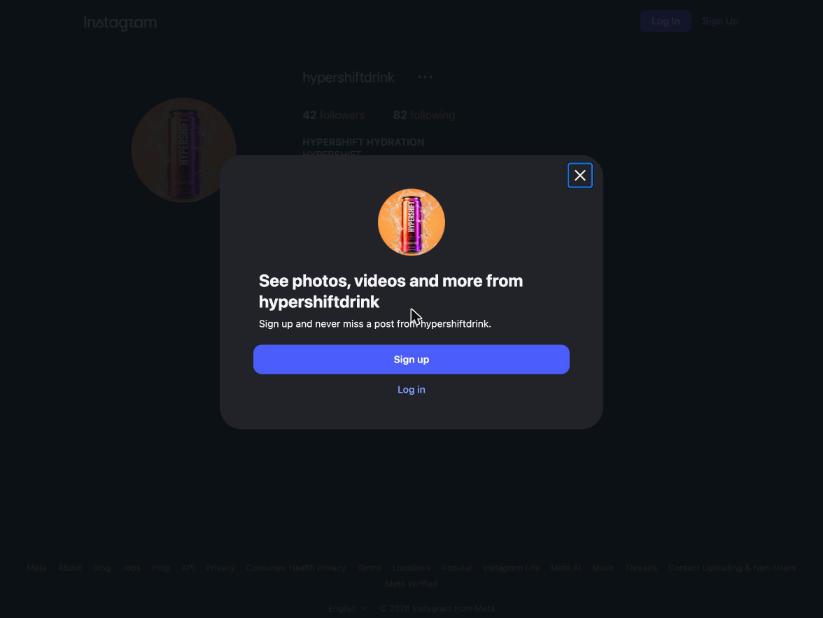
| Social links | Instagram only. No TikTok, LinkedIn, Facebook, YouTube. |
| Robots | Squarespace default. AI crawlers (GPTBot, ClaudeBot, Google-Extended and others) are allowed the same paths as everyone else, which is the right setting for a brand that wants to show up in AI answers. |
| Load | DOM ready in about 0.6 s, full load about 1.7 s on a fast connection. Fine. |
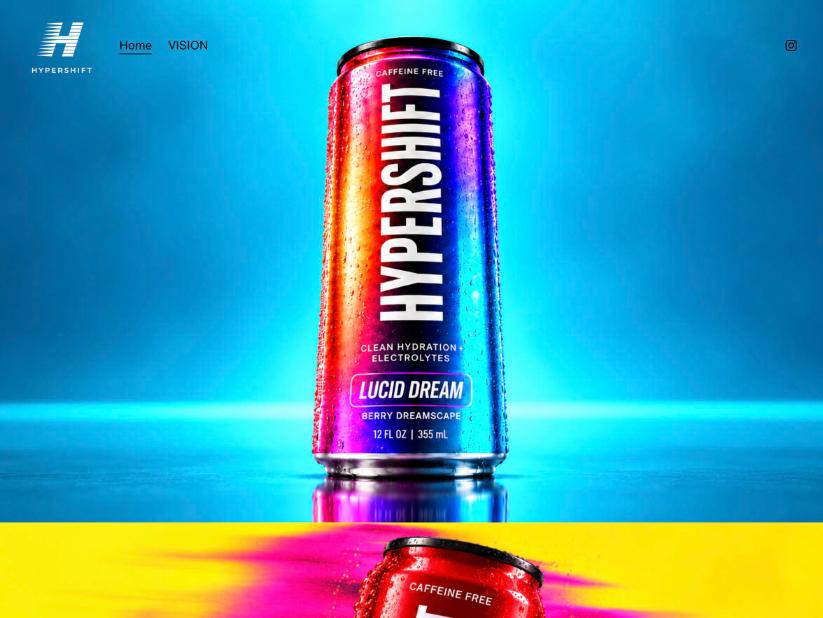
| Flavors | FAQ: Berry Wave, Blue Limeade, Cherry Vibe, Tropic Glow, Lucid Dream (sparkling only). Cans pictured: Lucid Dream (Berry Dreamscape), Cherry Vibe (Red Cherry), Blue Flash (Blue Limeade), Tropic Glow (Pineapple Mango). 12 fl oz / 355 mL. |
| Price, size, launch date, where to buy | None stated anywhere. |
Findings, in priority order
Website and Google say real cane sugar. Instagram bio says zero sugar. A 2016 forum thread that ranks for the brand name also says zero sugar. Buyers, press and AI summaries will pick one at random.
Decide, then update the site, the Instagram bio, the can copy references and the FAQ in the same day. If the formula moved to cane sugar, say why on the Vision page; it is a selling point in 2026.
Every "early access" signup is a form submission with no provider behind it, so there is nothing to send a launch sequence to.
Klaviyo form (email + optional phone with SMS consent language) embedded in place of the contact form. Export whatever is in the Squarespace inbox now and import it as the first segment.
No GA4, no Search Console evidence, no Meta pixel. Ads cannot optimise and nobody can see which page or post produced a signup.
GA4 + Google Search Console + Meta pixel and Conversions API this week, before any paid test. Squarespace supports all three through settings and code injection.
/about-2-1 still carries consulting template copy with a "Book Now" button. /van is empty. Both are in the sitemap and will be read by crawlers and AI engines as part of the brand.
Delete or disable both. If the van page is meant for a sampling vehicle, hold it until there is content.
"Blue Limeade" in the FAQ, "Blue Flash" on the can. "Berry Wave" exists in the FAQ only.
One flavor list, used everywhere, with the tagline under each name (Lucid Dream, Berry Dreamscape, and so on).
Visitors cannot answer the four questions they came with. Neither can an AI engine asked "how much is HyperShift."
Even pre-launch: "12 fl oz cans, 12-packs from $XX, shipping mid-December, first stores in Danville." Replace the Xs when the price is set.
About 80 words on the homepage, no page per flavor, no ingredient or nutrition panel, no About with a person on it.
Five flavor pages, one About page with Ray's name and the reason the drink exists, an FAQ with 20+ questions written the way people ask them. Product and FAQ schema on each.
All product images have empty alt attributes; one file name says "Energy Drink."
Rename files to the flavor and format, write alt text that says what the can is.
"Hydration for what's next" and "Be first to try HyperShift" are both H1. No H2s.
One H1 per page, H2 for sections. Squarespace lets you set heading levels per block.
Ray's LinkedIn is already what Google shows for the founder query, and LinkedIn is where the office-fridge and wholesale conversations start.
Add LinkedIn (company page + founder) and TikTok once there are three posts on each.
Subscriptions are limited (one subscription product per checkout, no pause or edit), there is no native pre-order, and SMS tools like Postscript are Shopify-only.
Launch on Squarespace with a simple one-time 12-pack checkout and a reservation form. Plan the Shopify move for the quarter after launch, when subscriptions and wholesale ordering become the growth lever.
A grocer, a gym owner or a reporter has no page to land on and no way to ask.
"Stock HyperShift" page with a sell sheet PDF and a short form. "Press" page with the founder photo, can renders and a 150-word boilerplate.
Google and AI search
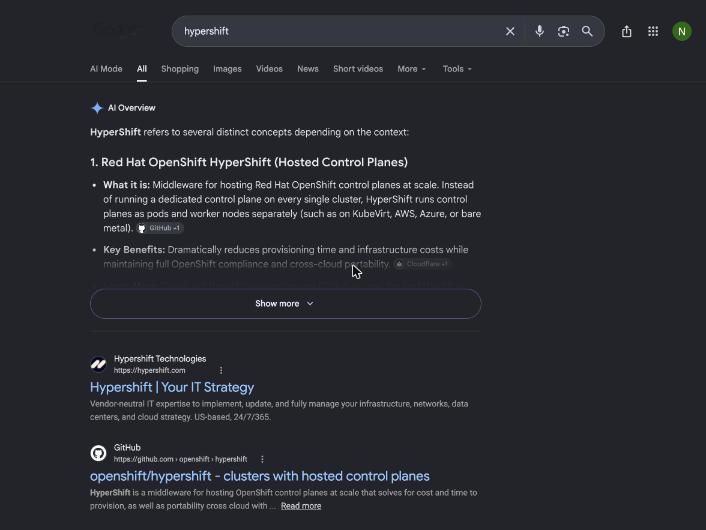
The problem is narrower than it looks. The brand already wins the queries that include a category word. It loses the bare name to much bigger entities, and it is close to invisible on engines other than Google because there is almost nothing to index.
What the checks showed
| Query | Result (Google, 31 Oct 2026) |
|---|---|
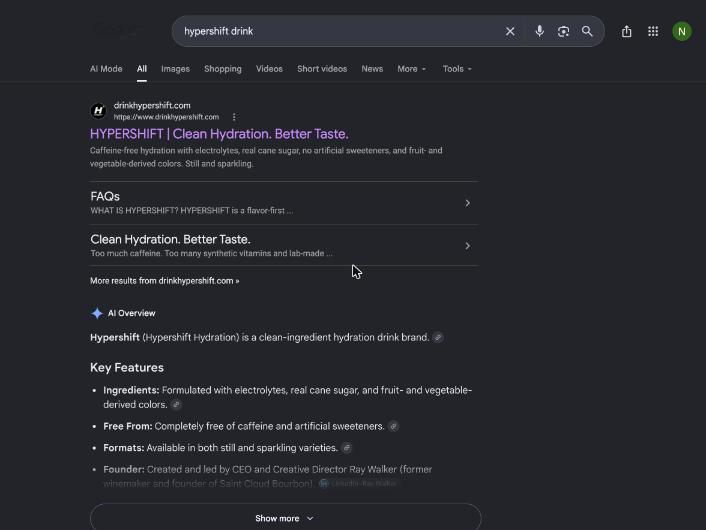
| hypershift drink | drinkhypershift.com #1 with FAQ and Vision sitelinks. AI Overview names the brand, ingredients, formats and the founder. Below: Instagram, founder's LinkedIn, a 2016 wine forum thread, an LMNT ad, car-paint videos. |
| hypershift hydration | drinkhypershift.com #1 with sitelinks and an AI Overview. Also: Instagram, a competitor named Shifted, LMNT and DryWater ads, car-paint content. "People also search for" includes "Hypershift hydration automotive paint." |
| hypershift | AI Overview about Red Hat OpenShift. Results: Hypershift Technologies (hypershift.com), GitHub, Red Hat, Reddit (Razer Hypershift), DipYourCar HyperShift paint. No drink on page one. |
| hypershift drink (non-Google engine) | Zero results for the brand. All results were the Red Hat project, a car shifter and unrelated drinks. |
Two things stand out. Google's AI Overview already associates the founder's name and his previous bourbon brand with HyperShift, so that connection exists in search whether or not the site mentions it. And the only third-party pages that mention the drink are a founder LinkedIn profile, an Instagram page and an old forum thread, which is why engines that lean on citations have nothing to say.
The plan
Own the entity, not the keyword
- Use "HyperShift Hydration" as the consistent brand string everywhere: site title, Organization schema, Instagram name, LinkedIn page, Google Business Profile, press boilerplate. The modifier is what lets Google, Bing and the AI engines tell the drink apart from the software.
- Organization + Brand schema on the homepage with sameAs links to Instagram, LinkedIn, TikTok. Product schema on each flavor page with offers once pricing exists. FAQPage schema on the FAQ.
- Google Business Profile for HyperShift Hydration, Danville, as a "beverage company." It is the fastest way to get a knowledge panel for a small brand and it anchors the local launch.
- Wikidata entry once there are two or three independent sources (local press counts).
Write the pages the questions want
- Flavor pages: "Lucid Dream sparkling hydration drink" and so on. Ingredients, electrolytes per can, sugar grams, calories, still or sparkling, 12 fl oz.
- Comparison and answer pages that AI engines love to cite: "HyperShift vs Gatorade," "caffeine-free electrolyte drinks with real sugar," "is HyperShift an energy drink" (no, and say why), "where to buy HyperShift in Danville."
- FAQ rewritten in the words people type: "does HyperShift have caffeine," "how much sugar is in HyperShift," "is HyperShift good for kids' soccer," "can I buy HyperShift on Amazon."
- An About page with Ray's name, a photo and the one-paragraph reason the drink exists. Entities need a person.
Earn mentions
- Local press at launch (Danville San Ramon, Diablo Magazine's Diablo Dish, Patch) and a BevNET press release through their portal. These are the citations AI engines look for.
- Every retail account gets a line on the "Find it" page. Each one is a local-intent signal.
- Founder LinkedIn posts and Instagram Reels with the brand string in the caption, not just the hashtag.
Measure
- Search Console weekly: impressions and clicks for the branded terms, plus "caffeine free electrolyte drink" and "hydration drink cane sugar."
- Once a month, ask ChatGPT, Perplexity, Gemini and Claude "what is HyperShift hydration" and "best caffeine-free electrolyte drinks in cans" and keep the screenshots. That is the AI-search scoreboard.
Realistic expectation: branded two-word queries stay #1 and gain a knowledge panel within 60 to 90 days of the schema and Google Business Profile work. Category queries like "caffeine-free electrolyte drink" are owned by Gatorade, BodyArmor and content sites; the goal there is to show up in AI answers as the cane-sugar option, not to outrank them.
Ten people visit the site
The same page, read through the eyes of the people who will actually decide whether this brand works. Each one came with a question. Most left without an answer.
Consumers
Maya, 29, runs with a Wednesday club
Saw a can at a friend's. Wants to know if it is better than the Nuun she uses.
- Came for
- Electrolyte amounts, sugar grams, price, whether it is sold near her.
- Found
- A great-looking can, "electrolytes" with no numbers, "real cane sugar" with no grams, no price, no store list.
- Stopped by
- She cannot compare it to anything. Closed the tab.
- Fix
- Nutrition panel per flavor, a one-line comparison to the two drinks she already knows, and a store finder.
Dan, 41, coaches his kid's U10 soccer team
Quit energy drinks last year. Buys the team's snacks. Lives in Alamo.
- Came for
- Is it OK for kids, how much sugar, can I buy a case for the team.
- Found
- "Caffeine free" front and center, which he liked. Nothing about kids, nothing about sugar grams, no case pricing.
- Stopped by
- No way to buy, and "real cane sugar" without a number makes him nervous for the team parents.
- Fix
- A short "for families and teams" answer in the FAQ, sugar per can stated plainly, a team-case option, and a youth-sports page later.
Priya, 24, TikTok first, zero-sugar by default
Drinks Poppi and LMNT. Found the Instagram, then the site.
- Came for
- The vibe, the flavors, and whether it fits her zero-sugar habit.
- Found
- Instagram said zero sugar. The website says real cane sugar. Confusing.
- Stopped by
- She assumes the brand does not know its own product.
- Fix
- One sugar story. If it is cane sugar, make the case for it the way Coke and Electrolit are now making it, and tell her the grams.
Trade buyers
The grocery buyer at an independent (think Lunardi's or Diablo Foods)
Gets pitched weekly. Cares about velocity, margin, delivery and whether the brand will drive traffic.
- Came for
- Wholesale price, case pack, UPC, shelf life, who delivers, what marketing support exists, who else carries it.
- Found
- Nothing for him. No wholesale page, no sell sheet, no contact beyond a consumer form.
- Stopped by
- He cannot tell if the company is real yet.
- Fix
- "Stock HyperShift" page with a downloadable sell sheet (price, case pack, UPC, dimensions, shelf life, delivery), a free-fill offer for the first case, and a demo commitment.
The gym or studio owner
Has a fridge by the front desk. Already stocks a sparkling water and a protein drink.
- Came for
- Does it sell at $3 to $4 a can, will members want it, what does the brand do for me.
- Found
- Beautiful cans and no business case.
- Stopped by
- Nothing to forward to a business partner.
- Fix
- Same wholesale page, plus a "members-first" angle: sampling day, a QR code on the fridge that gives members a discount, the gym named in the app's store finder.
The distributor rep (DSD or specialty)
Will not touch a brand under a certain velocity. Looks for proof.
- Came for
- Doors, velocity, marketing spend, margins, who is behind it.
- Found
- Pre-launch site, no numbers.
- Stopped by
- Too early, and the site gives no reason to remember the brand.
- Fix
- Not a site fix. Ninety days of self-distributed East Bay velocity data, then a one-page deck. The site just needs a founder name and a press page so he can look you up.
Partners who sell to their own people
The office manager at a 60-person startup
Stocks the kitchen. Her CEO just asked for "less Celsius."
- Came for
- Case price, recurring delivery, can she expense it, is it local.
- Found
- No price, no business ordering, no mention of offices.
- Stopped by
- No way to order ten cases.
- Fix
- "For offices" section: cases delivered in the Bay Area, invoice or card, free first case, the brand's local story. This is where Nick's network converts.
The race director or run club organizer
Needs a hydration sponsor for a 5K in spring. Has three brands pitching.
- Came for
- Will you show up with product and people, what is the ask, who do I email.
- Found
- No events or sponsorship page, no email.
- Stopped by
- Goes with the brand that answered.
- Fix
- A one-paragraph "events and sampling" section with an email address, and a calendar of where the van or the tent will be.
Readers who decide what everyone else sees
The BevNET or local reporter
Writes four new-brand items a week. Needs facts and a face.
- Came for
- Founder name, city, launch date, price, where to buy, what is different, a photo.
- Found
- No founder on the site, no date, no price, no press kit. The Vision page is unsigned.
- Stopped by
- She can write a two-line item at best, and she will lead with the bourbon connection because that is what Google gave her.
- Fix
- A Press page with the facts above, three can renders, a founder photo and the boilerplate. Decide what the first line of the story should be before someone else does.
The AI engine asked "best caffeine-free electrolyte drinks in cans"
ChatGPT, Perplexity, Gemini, Google's AI Mode.
- Came for
- Named products with attributes it can compare: caffeine, sugar, sweetener, format, price, where sold, third-party mentions.
- Found
- Ingredients in prose, no numbers, no comparison pages, one indexed social profile, zero press.
- Stopped by
- It lists BodyArmor, Electrolit and LMNT and never mentions HyperShift.
- Fix
- Everything in the search section: numbers on pages, schema, comparison pages, press mentions, consistent brand string.
Positioning and price
Caffeine-free, cane sugar, in a 12 oz can, still and sparkling. Almost every hydration brand launched since 2024 went zero-sugar. That makes cane sugar both the open lane and the thing to defend, so defend it on purpose.
Where the market is
- US sports drinks are roughly an $11.5B category and flat. Gatorade holds about two thirds. The growth is in challengers: Electrolit up 31% to $775M on a real-sugar, pharmacy-style story, and just-add-water powders up 16% led by Liquid I.V. PRIME fell by half after an influencer-led start, which is the cautionary tale for hype without repeat purchase. BevNET, Circana 52 weeks to Apr 2026.
- Flavor is the number one purchase driver at 46%; low or no sugar is second at 32%. FoodNavigator. "Bold flavor" is the right lead. Sugar needs an answer, not an apology.
- Real sugar has cover it did not have two years ago: Coke's US cane-sugar cola and the state-level pushback on synthetic dyes and HFCS. BevNET. Fruit and vegetable colors are a dye story too; say so.
- The 12 oz can at $2.49 to $2.99 is a price shoppers already accept from Olipop and Poppi, and the newest hydration entrants (BodyArmor FIT, LMNT Sparkling) are cans. Olipop pricing, LMNT Sparkling.
Price band from the evidence
| Reference | Price | Note |
|---|---|---|
| Olipop single can (retail) | $2.49 to $2.99 | 12 oz, the better-for-you can benchmark |
| Olipop 12-pack | About $29.99 retail, $26.99 DTC subscription | About $2.25 a can on subscription |
| LMNT Sparkling (DTC) | $2.50 a can | 16 oz, zero sugar |
| Electrolit 21 oz bottle | About $2.46 | Real sugar, caffeine-free, the fastest-growing challenger |
| Barcode 12-pack (DTC) | $39 | Needed Erewhon and NBA owners to hold that price |
A working range for HyperShift: $2.49 to $2.79 a can at shelf, $27 to $33 for a 12-pack online, about 10 to 15% off on subscription. estimate Above $33 you are in Barcode territory without Barcode's backers. Confirm against COGS and shipping; see the unit economics note under budgets.
The sentence to repeat
Something like: HyperShift Hydration is a caffeine-free electrolyte drink in a 12 oz can, made with real cane sugar and colors from fruit and vegetables, still or sparkling, from Danville, California. Every page, profile and press mention should be able to carry that sentence or a shorter cut of it. It is what the AI engines will quote.
What to lead with for each audience
| Audience | Lead | Avoid |
|---|---|---|
| Runners, lifters, studio members | Electrolytes without the caffeine crash, tastes like something you want after a workout | Medical claims, "IV-level" |
| Parents and youth sports | No caffeine, no artificial sweeteners or dyes, a real drink kids will finish | Anything that sounds like an energy drink |
| Gen Z, zero-sugar habit | Flavor first, honest sugar in grams, no fake sweeteners | Hiding the sugar |
| Offices and tech teams | The afternoon drink that is not a third coffee or a Celsius; local brand | Wellness jargon |
| Retail buyers | Velocity plan, demos, local demand, margin | Brand story without numbers |
Customer lifecycle
Eleven moments, each with one trigger, one job, and the channel that fits it. The app prototype's simulator fires every one of these so you can see them on a phone. The same plan runs whether or not the app exists; push just becomes email until it does.
Rules that apply to every stage
- One message, one job. If a message has two calls to action it is two messages or none.
- Frequency caps: SMS at most 4 a month, push at most 1 a week outside releases, email at most 2 a week.
- Every send is stopped by the behavior it was asking for. Someone who reorders never sees the reorder reminder.
- Quiet hours 8 am to 9 pm recipient local time for texts, and no texts on Sunday mornings even though the law allows it.
- Copy sounds like a person. Ray's name on the lapsed text, Nick's or Ray's on the office emails.
What to measure
| Stage | Metric | Starting target estimate |
|---|---|---|
| Waitlist | List size at launch; % with a case held | 1,000 contacts; 10% with a reservation |
| Launch | List-to-order conversion in 72 hours | 5 to 8% |
| First sip | Rating response rate | 20% |
| Reorder | 90-day repeat rate | 25% (DTC food and beverage norm is 25 to 40%) |
| Subscriber | Monthly churn | Under 7% |
| Advocate | Referral share of new orders | 10% by month 3 |
| Near you | Store-finder taps per push | 15% |
Channel by channel
The plan per channel is here. The actual words (ad scripts, every text, the six email flows, LinkedIn posts, the Instagram calendar, the sampling script and the press release) are in the copy playbook.
Email (Klaviyo)
The backbone. Free to 250 profiles, $30 a month at 1,000, $60 at 2,500, $100 at 5,000. Pricing. There is no native Squarespace integration, so connect it through Zapier or the Klaviyo API; this is one of the reasons to move to Shopify later.
- Flows to build before launch: welcome (3 emails over 10 days), launch sequence (3), post-purchase (shipping, first sip, how to store), reorder (2), lapsed (1), referral (1).
- Campaigns: one a week at most. A founder note, not a newsletter.
- Benchmarks to beat: flows click about 5.6%, placed-order about 2.1%; campaigns open about 31%, click about 1.7%. Klaviyo 2026.
SMS
The launch-day channel and the only one that reaches the whole list within an hour. While on Squarespace, Klaviyo SMS is the practical choice (about $0.009 a message, 1,250 credits for $15, 10,000 for $90). Postscript is Shopify-only; Attentive has quarterly minimums in the thousands and is not a fit yet. Klaviyo SMS, Postscript.
- Consent: an unchecked box with the frequency and STOP/HELP language, on the site form, the app, and the sampling tablet. Written consent is the whole legal basis; keep the records. TCPA basics.
- Register the brand and campaign for 10DLC the week the number is set up; it takes a few days and unregistered traffic gets filtered.
- Messages that earn their place: launch, release drops, local sampling within 48 hours, lapsed check-in, a reorder code about to expire. Nothing else.
- Benchmarks: click 9 to 14%, revenue per recipient $0.66 to $2.41 for ecommerce campaigns, opt-out under 1.5%. ClickMinded. Plan on 3 to 8% of site visitors joining SMS from a popup. estimate
- Sampling tablets: "text SHIFT to [number] for a free 4-pack at launch" is the single best list builder at gyms, studios and office drop-offs.
Push and in-app (the app)
Retention, not acquisition. Opt-in medians are about 49% on iOS and 53% on Android, with retail apps at the low end. Airship 2026. OneSignal is free to 1,000 monthly active users and from $19 a month after that. OneSignal. The prototype in this brief shows what the app does; the sequencing is in the app section below.
Instagram and Facebook ads (Meta)
The paid workhorse for consumers, and cheap for food and beverage: CPM roughly $8 to $14, CPC about $0.50 to $0.80, click-through about 2%. Meta benchmarks 2026. Unknown brands convert below the category average at first, so plan on a first-90-day cost per order of $60 to $120 and be pleased when it is lower. estimate
- Geography first. A 15-mile radius around Danville for the first 60 days, then the East Bay, then the Bay Area. Local ads make retail sell-through visible to the stores you are pitching.
- Three creative angles, tested in week one: the can (motion, condensation, color), the sugar story (real cane sugar, fruit and veg colors, grams on screen), the caffeine story (3 pm drink that is not a third coffee). Vertical video, under 15 seconds, captions on.
- Two objectives: leads (the waitlist, optimised for sign-ups) until launch; sales after. Retarget site visitors and video viewers with the founding member offer.
- UGC and nano creators: food and beverage nano creators (1k to 10k followers) run $50 to $250 a post and about 60% will post for product alone. Rates. Ten Danville and SF creators seeded in November give the ads their raw material.
- Facebook matters for the parents segment and local groups (Danville and Alamo community groups are active). Instagram carries everything else.
TikTok
Cheap reach (food and beverage CPM about $6) but weak link click-through (about 0.6%). Triple Whale via Influee. Use it for awareness and creator amplification (Spark Ads on creator posts), not for direct sales, and only once there are ten organic posts to learn from.
Two jobs, neither of them consumer ads. Expensive to pay for (CPM $30 to $90, CPC $6 to $15) benchmarks, so the paid part stays tiny.
- Founder-led content. Ray posts the build twice a week: formulation, can design, first retail yes, first retail no, the sugar decision. Nick reposts with his own take to a GTM audience. Documented cases (IWON Organics, Lexington Bakes) show this is how small CPG founders get retailer and investor attention. Foodbevy.
- Office and corporate wellness outreach. Direct messages to office managers, heads of people and founders at Bay Area companies with 30 to 300 people: free first case, QR code to reorder, one post from the office in return. Canteen sources emerging brands through RangeMe but requires UNFI or Vistar distribution, so that is a later step. RangeMe.
- A $300 to $500 a month LinkedIn test buys roughly 35 to 80 clicks to the "For offices" page. Worth it only to retarget people who already engaged with the founder posts. estimate
Organic Instagram
42 followers is a blank slate, which is fine. Fix the bio (sugar), add the link, then post the build: cans, people, places. Three Reels a week, every sampling as a story, every store as a post. Follow and comment on Danville, East Bay and run-club accounts daily for the first month. Growth target by launch: 500 followers who are mostly local. estimate
Gear
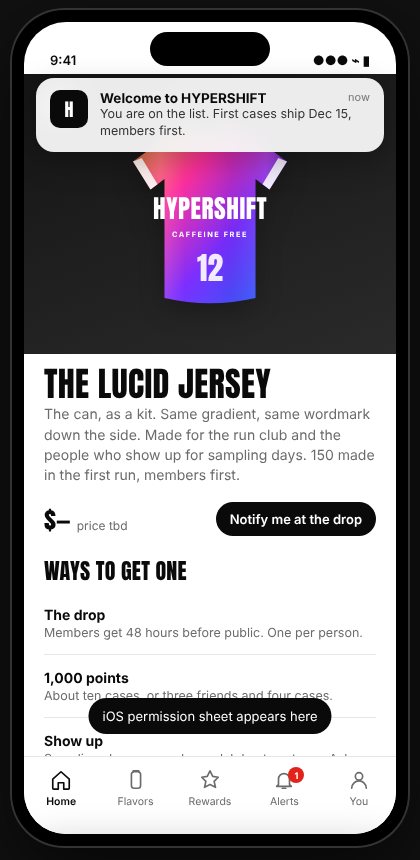
Ray's team is already making a jersey in the can colorway. Treat it as a channel, not merch: a limited run (say 150), members get 48 hours, one per person, and the first ones go free to the people who put the brand in front of others (sampling crew, run-club hosts, the gym owners who stocked it first). A jersey on a trail or in a class is the cheapest billboard the brand will buy, and every drop is a reason to message the list that is not a discount. Points tier in the app (1,000), then Cherry and Blue colorways when the first run sells through.
Local, in person
The channel that actually launches the brand. Details and dates in the Danville section. Everything above exists to make this work.
What budgets buy
Three monthly levels for the first 90 days after launch. All results are deliberately conservative. The honest read from the unit economics: paid DTC cannot carry a $30 12-pack with $14 to $25 shipping, so paid media's job is to create local demand that stores can see at the register.
About $2,000 a month
List building and local proof
- Tools $150 to $250: Squarespace Core, Klaviyo email + SMS to 1,000 profiles, OneSignal free.
- Paid $1,000 to $1,200 on Meta, geo-fenced to the East Bay.
- $600 to $800 on product for creators (4 to 8 nano creators) and 2 to 3 samplings a month.
About $5,000 a month
East Bay saturation and first retail
- Tools $300 to $400: Klaviyo at 2,500 to 5,000 profiles plus SMS credits.
- Paid $3,000 to $3,500: Meta 70%, TikTok Spark Ads 30%.
- Community $1,000 to $1,300: 2 to 4 samplings a month (5Ks, pickleball, gyms), 8 to 12 creators, free-fill cases for 15 to 30 accounts.
About $15,000 a month
Regional brand build
- Tools $800 to $1,500: Shopify Basic, Klaviyo at 10,000 profiles, SMS credits, OneSignal Growth once the app ships, a subscription app.
- Paid $9,000 to $10,000: Meta 55%, TikTok 20%, Google Shopping and Search 20%, LinkedIn 5% for the office test.
- Field $3,500 to $4,500: a part-time brand ambassador for Bay Area samplings, monthly run-club, pickleball and youth-sports partnerships, 20 to 30 creators, free fill for 50 to 80 doors, a self-distribution loop.
Benchmark sources for the tiers: Meta, TikTok, Google, LinkedIn, DTC food and beverage CAC $45 to $53 for established brands. Unknown brands run higher at first; the tiers assume 1.5 to 2x.
The app
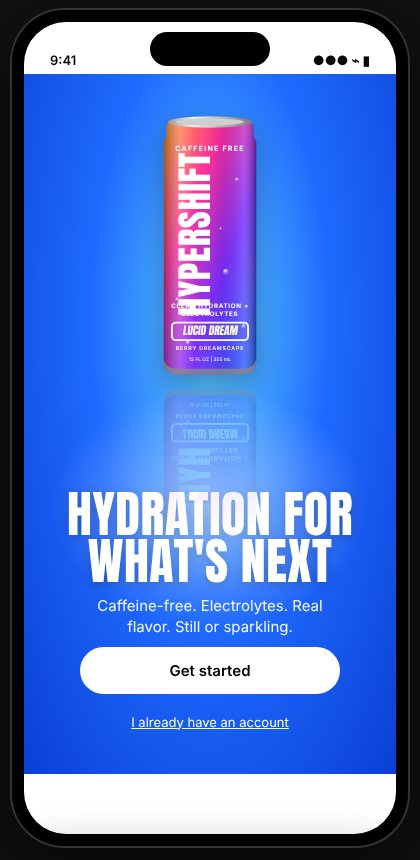
Ray asked for an app that can send updates about offers and new releases. The prototype does that and goes further: it treats the app as the place where the whole lifecycle lives, from the first flavor pick to the referral code, with a simulator that shows every message a customer would receive.
What is in it
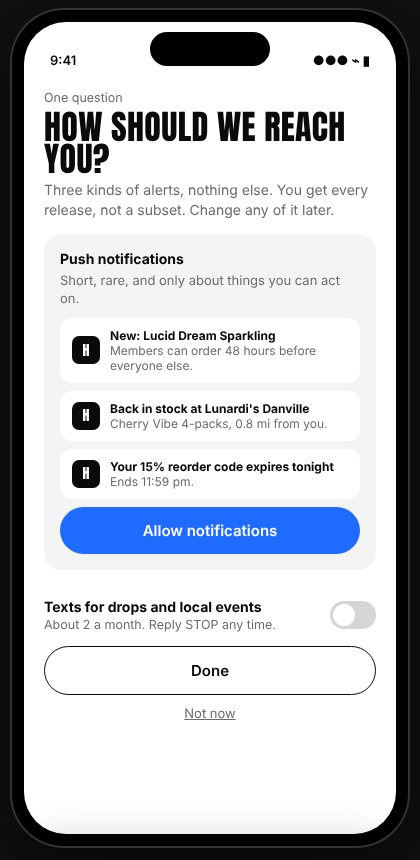
- Splash and three-slide onboarding (caffeine-free, flavors, first-to-know), then one question: how to reach you. No flavor picking; nobody is narrowed to a subset of releases.
- Home with carousels for releases, launch reservations, gear drops, local events, offers and flavors, plus a store-finder map.
- Gear: the jersey in the Lucid colorway as a members-first drop, a 1,000-point reward, and a thank-you for sampling crew and run-club hosts. Cherry and Blue colorways listed as coming.
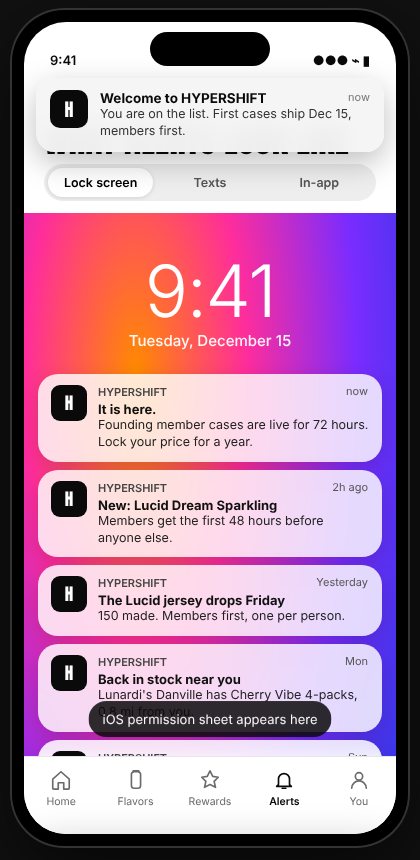
- Notification examples screen: a lock screen with six stacked pushes, a text thread, and the in-app sheets, so the whole system reads at a glance.
- Flavor list and detail with facts, stock alert toggle, quantity and a placeholder price that hands off to the website for checkout.
- Rewards: points for cases and friends, referral code, founding member status.
- Alerts inbox with four preference toggles, so people trim instead of turning everything off.
- Profile with subscription, flavors, orders and a delete-my-data row.
- The lifecycle simulator: eleven stages, each firing a push, text or in-app message with the logic behind it.
Left out on purpose
- Checkout and payments. Hand off to the website until there is a store; Apple's rules make in-app physical goods purchases fine but the store does not exist yet.
- Accounts and passwords. Phone or email is enough for v1.
- Hydration tracking and streaks. They inflate scope and most people stop within two weeks.
How to ship it
| Phase | What | Why |
|---|---|---|
| Now to launch | Web app at app.drinkhypershift.com: the prototype's screens as a real PWA with Klaviyo forms, OneSignal web push, and a store finder. Add to home screen on Android and iOS. | Push works on the web on both platforms now; no app store review; one codebase; ready for launch day. |
| Month 2 to 4 | Native wrapper (Capacitor or Expo) of the same app, submitted to both stores. Rewards and referral live. | Native push opt-in and a store listing matter once the list is in the thousands, not before. |
| Month 4+ | Subscription management in-app once the store moves to Shopify; location-based "near you" alerts tied to retail accounts. | These depend on commerce and retail data that does not exist yet. |
Build cost for the PWA phase is small (a week or two of focused work from the prototype). Native submission adds Apple and Google developer accounts ($99 a year and $25 one-time) and review time. The prototype is static HTML; everything in it can be reused.
45 days to launch
Assumes a launch on or about Tuesday 15 December 2026. Each week lists what is done by Sunday. If a week slips, the launch date holds and the slipped item moves to the first 30 days after.
Danville and the network
Two advantages most beverage startups do not have: a town that shows up for local businesses, and a founder's neighbor with a large tech and sales network across the Bay Area. Both are cheap to use and both compound.
About the CytoSport story
Worth getting right before anyone says it to press. CytoSport, maker of Muscle Milk, was founded in 1998 by Greg and Mike Pickett and headquartered in Benicia, about 30 miles north of Danville. Hormel bought it in 2014 for about $450M and sold it to PepsiCo in 2019 for $465M. Four targeted searches found no documented tie between the Picketts or CytoSport and Danville, so treat the "Danville company" version as local lore unless someone can source it. The safe line is "the East Bay has already produced a $450M sports nutrition exit." Hormel, Wikipedia.
Danville, in priority order
| Where | Why and how |
|---|---|
| Lighting of the Old Oak Tree Fri Nov 27, 2026 | The 50th edition, two weeks before launch. Partner with a downtown shop (Forward Motion Sports, Sideboard, Danville Brewing) for a "coming Dec 15" presence. Sponsorship for next year goes through the Chamber. Town events. |
| Forward Motion Sports 432 Hartz Ave | Specialty run store with a Wednesday night group run and a long history with the Devil Mountain Run. First run-store account and a weekly sampling. |
| Gyms and studios | CrossFit Danville (owner Dusty Sulon), Orangetheory Danville, Fit19, x2o. Fridge placement, member discount QR, sampling day. |
| Fleet Feet Pleasanton Run Crew Sat 8 am, Tue 6:30 pm | Free runs; Saturdays currently end with a competitor's electrolyte drink, so there is an incumbent to displace. Contact ethan.falls@fleetfeet.com. Run Crew. |
| Valley Spokesmen ~500 members | Friday rides from Sports Basement San Ramon, Wednesday Mt. Diablo climb. Cheap sampling stop and a Sports Basement conversation. Club. |
| Youth sports and schools | San Ramon Valley Little League (1,000+ players, opening day early March). SRVHS boosters: field banner $900, scoreboard from $2,000 a year (Gina Nicholson, ginanich@gmail.com). Monte Vista boosters by email. Danville Brewing already sponsors the SRVHS scoreboard, so a local beverage sponsor is precedented. Caffeine-free is the wedge. SRVHS. |
| Independents | Lunardi's Danville (store manager first), Diablo Foods Lafayette (works directly with producers, allows demos), Draeger's Blackhawk, Sideboard and Peet's for coffee. No public vendor forms; walk in with a cold can and a sell sheet. |
| Chamber | Mixers Jan 14 and Feb 11, 2027 ($20 non-member). Membership $415 a year. Sip & Stroll in May from $500. Devil Mountain Run, first Sunday in May, is the local race to sponsor. Mixer. |
| Local press | Danville San Ramon (news tip form), Diablo Magazine's Diablo Dish (925-943-1111), Patch Danville (self-post, $2 a day featured). Story: Danville founder launches a caffeine-free hydration drink, first stocked in local gyms and offices. |
| Peers and money | gr8nola (Erica Liu Williams, Danville) for founder advice. Naturally Bay Area for retail access events. The Angel Group / Supernatural Ventures, a 275-member food and beverage angel group that backed Poppi, ranks founder, retail velocity, COGS and price point. Taste Radio. |
Nick's side: the Bay Area tech network
The tech crowd is the right early adopter for a caffeine-free 3 pm drink, and it talks. The play is product in fridges and hands, not sponsorship checks.
- Twenty office fridges by end of January. Direct LinkedIn messages to founders and office managers at Bay Area companies with 30 to 300 people. Free first case, a QR code on the fridge to reorder, one post from the office in return. East Bay coworking at Bishop Ranch (WeWork, Spaces, Regus) and SF hubs (Shack15, Founders Inc, Frontier Tower) are the densest targets.
- RevGenius IRL happy hour in SF, HyperShift as the drinks sponsor. The sober-option angle writes itself for a sales community. Feature or partner requests go to hello@revgenius.com; the Luma calendar is where it gets listed. RevGenius Luma.
- Hackathons and founder dinners. Rolling on Luma, 100 to 300 people, organizers want free drinks. Two a month in January and February, 2 to 4 cases each. Cheapest sampling in the Bay Area.
- Founders Running Club SF. Weekly, Golden Gate Park, 9:30 am Saturdays. Tech founders who run. Reach the host through Luma. Luma.
- LinkedIn content, two voices. Ray builds in public. Nick posts the GTM side: what it takes to launch a CPG brand with no budget, what the office-fridge channel looks like, what the data says after 30 days. Both link to the same page. Nick's existing content series and audience are the amplifier.
- SF Tech Week 2027 (likely October; 2026 ran Oct 5 to 11). Hosting an event is free beyond your own costs. A HyperShift-hosted morning run or a sober happy hour, plus supplying drinks to ten other hosts. Budget for it now, plan it in summer. Tech Week hosting.
- SaaStr Annual, May 11 to 12, 2027 (San Mateo). Not a sponsorship; a side event and cases in the right hands.
- Trade: BevNET Live LA, Dec 6 to 8, 2026. Sampling fridges and 1:1 meetings with distributors and investors. Worth it only if Ray can go; ticket price not confirmed and historically four figures. BevNET Live.
What Nick can carry without Ray: the office-fridge program, the RevGenius event, the LinkedIn amplification, and the intros to Naturally Bay Area and the angel group when the numbers are ready. What needs Ray: every press conversation, the gym and studio samplings, retail walk-ins, and the founder posts.
Questions for Ray
Answers to these change the plan more than anything else in this document.
- Cane sugar or zero sugar, and how many grams per can? The website and Instagram disagree today.
- Final flavor names and which are still, sparkling, or both. Blue Flash or Blue Limeade? Is Berry Wave launching?
- Target price per can and per 12-pack, and landed cost per can. The whole channel plan depends on the margin.
- Where does the first case ship from, and what does it cost to ship a 12-pack within California? Is there a 3PL?
- Exact launch date, and is it DTC only on day one or are there committed stores?
- Is Southern California part of the plan? A LinkedIn snippet surfaced in search suggesting a SoCal focus; the brief assumes the East Bay first.
- What is the /van page for? If there is a sampling vehicle, it changes the local plan.
- Who is on the team besides Ray, and who owns the website, Instagram and the Squarespace account day to day?
- Is there a budget range for the first 90 days, even a rough one? The tiers are built so he can pick.
- Can we get the logo files, can renders, brand colors and fonts? The prototype uses CSS stand-ins for the cans.
- How does he want his background handled in press? Google already connects it; the brief keeps it out of the messaging.
Sources and method
What was checked directly
- drinkhypershift.com homepage, /behind-the-shift, /faqs, /van, /about-2-1, robots.txt and sitemap.xml, crawled on 31 Oct 2026.
- Live Google results in Chrome for "hypershift," "hypershift drink" and "hypershift hydration," plus one non-Google engine, same date. Screenshots above.
- Instagram @hypershiftdrink profile page (public view).
- Homepage HTML inspected in the browser: headings, forms, scripts, schema, image alt text, load timing.
What was not checked
- Mobile rendering of the live site in a real phone browser (desktop width only). Squarespace templates are responsive, but check the form and the lineup section on a phone.
- Instagram post content (not logged in).
- Shelf prices for several competitors whose sites blocked automated reading; those are marked in the price table's sources.
- Current vendor processes at Lunardi's, Draeger's and Nob Hill.
- Any tie between CytoSport or the Picketts and Danville (searched, none found).
Outside sources
- BevNET, BodyArmor in focus (Circana data, 52 weeks to Apr 2026): https://www.bevnet.com/magazine/issue/2026/bodyarmor-in-focus
- Beverage Industry, 2025 State of the Industry, sports drinks: https://www.bevindustry.com/articles/97621-2025-state-of-the-beverage-industry-sports-protein-drink-market-experiences-growth
- FoodNavigator, sports drink trends: https://www.foodnavigator.com/Article/2025/02/26/sports-drinks-trends-from-zero-sugar-to-clean-label/
- BevNET, Coke cane sugar: https://www.bevnet.com/news/2025/trump-says-coke-will-switch-to-cane-sugar-for-u-s-beverages
- Olipop pricing analysis: https://healthrx.com/brands-olipop/pricing-analysis
- LMNT Sparkling: https://drinklmnt.com/products/lmnt-sparkling
- Electrolit price: https://aislegopher.com/p/electrolit-electrolyte-drink-green-apple-210-oz-bottle/18064705
- Barcode launch and pricing: https://www.bevnet.com/?p=204744
- eightx, beverage pricing strategy: https://eightx.co/blog/beverage-brand-pricing-strategy
- eightx, beverage financial benchmarks: https://eightx.co/blog/beverage-financial-benchmark
- eightx, CPG retail distribution margins: https://eightx.co/blog/cpg-retail-distribution-margins
- Olipop playbook: https://ctwb-newsletter-4bb52e.beehiiv.com/p/the-olipop-rebellion-playbook
- Voyager Milk on slotting: https://www.foodnavigator.com/Article/2025/01/02/startup-voyager-milk-shares-tips-to-skip-slotting-fees/
- Meta ads benchmarks 2026: https://contentstudio.io/blog/meta-ads-benchmarks
- TikTok ads benchmarks (Triple Whale): https://influee.co/blog/tiktok-ads-benchmarks
- Google Ads ecommerce statistics: https://www.webtonic.io/blog/e-commerce-google-ads-statistics
- LinkedIn ads benchmarks: https://www.clickminded.com/linkedin-ads-benchmarks/
- SMS marketing benchmarks: https://www.clickminded.com/sms-marketing-benchmarks/
- Klaviyo email and SMS pricing: https://www.firstpier.com/resources/sms-klaviyo-pricing
- Klaviyo benchmarks: https://www.klaviyo.com/uk/products/email-marketing/benchmarks
- Postscript pricing: https://postscript.io/pricing
- TCPA compliance basics: https://www.infobip.com/blog/tcpa-compliance-sms
- Eleventh Circuit on the one-to-one consent rule: https://www.mofo.com/resources/insights/250130-eleventh-circuit-vacates-fcc-s-tcpa-one-to-one-consent-rule
- OneSignal pricing: https://onesignal.com/pricing
- Airship push benchmarks 2026: https://www.airship.com/mobile-app-push-notification-benchmarks-for-2026/
- Squarespace commerce limitations: https://www.swell.is/content/squarespace-commerce-limitations
- Shopify pricing 2026: https://www.nerdwallet.com/article/small-business/shopify-pricing
- Nano creator rates, food and beverage: https://www.launchpointhq.com/guides/rates/how-much-do-food-beverage-nano-influencers-charge
- Pickleball sponsorships (Poppi, Sanzo): https://www.modernretail.co/marketing/dtc-beverage-startups-like-sanzo-poppi-are-sponsoring-pickleball-leagues/
- Hormel acquires CytoSport: https://investor.hormelfoods.com/news-and-events/news/news-details/2014/CytoSport-To-Be-Acquired-By-Hormel-Foods-Corporation/default.aspx
- CytoSport: https://en.wikipedia.org/wiki/CytoSport
- Town of Danville community events: https://www.danville.ca.gov/242/Community-Events
- Danville Chamber mixer Jan 2027: https://business.danvilleareachamber.com/events/details/danville-area-chamber-monthly-mixer-01-14-2027-10803
- Sip & Stroll sponsorship tiers: https://danvilleareachamber.com/wp-content/uploads/2026/04/SIp-Stroll-2026-Sponsorship-Opp.pdf
- SRVHS scoreboard sponsors: https://srvhs.srvusd.net/Athletics/Athletic-Boosters/Scoreboard-Sponsors/index.html
- SRV Little League merger and opening day: https://www.pleasantonweekly.com/sports/2026/03/05/one-league-one-valley-expanded-srv-little-league-set-for-first-opening-day-after-merger/
- Fleet Feet Pleasanton Run Crew: https://fleetfeet.com/s/pleasanton/runcrew
- Valley Spokesmen: https://valleyspokesmen.wildapricot.org/
- Danville Brewing Co: https://patch.com/california/danville/new-brewing-company-debuts-danville
- The Angel Group on Taste Radio: https://tasteradio.com/episodes/they-backed-poppi-now-the-angel-group-wants-to-back-you
- Naturally Bay Area membership: https://naturallybayarea.glueup.com/organization/1736/memberships
- RevGenius on Luma: https://luma.com/revgeniuscommunity
- Founders Running Club SF: https://luma.com/frc-san-francisco
- Tech Week hosting cost: https://intercom.help/tech-week-by-a16z/en/articles/14174349-what-is-the-cost-for-hosting-at-tech-week
- Canteen sourcing via RangeMe: https://www.rangeme.com/blog/canteen-makes-snack-breaks-better-with-the-help-of-rangeme/
- Founder-led LinkedIn, Lexington Bakes: https://www.foodbevy.com/?p=29372
- BevNET Live LA 2026: https://www.bevnet.com/events/bevnetlivela2026/home
- BevNET press release portal: https://www.bevnet.com/news/2024/bevnet-launches-new-press-release-portal